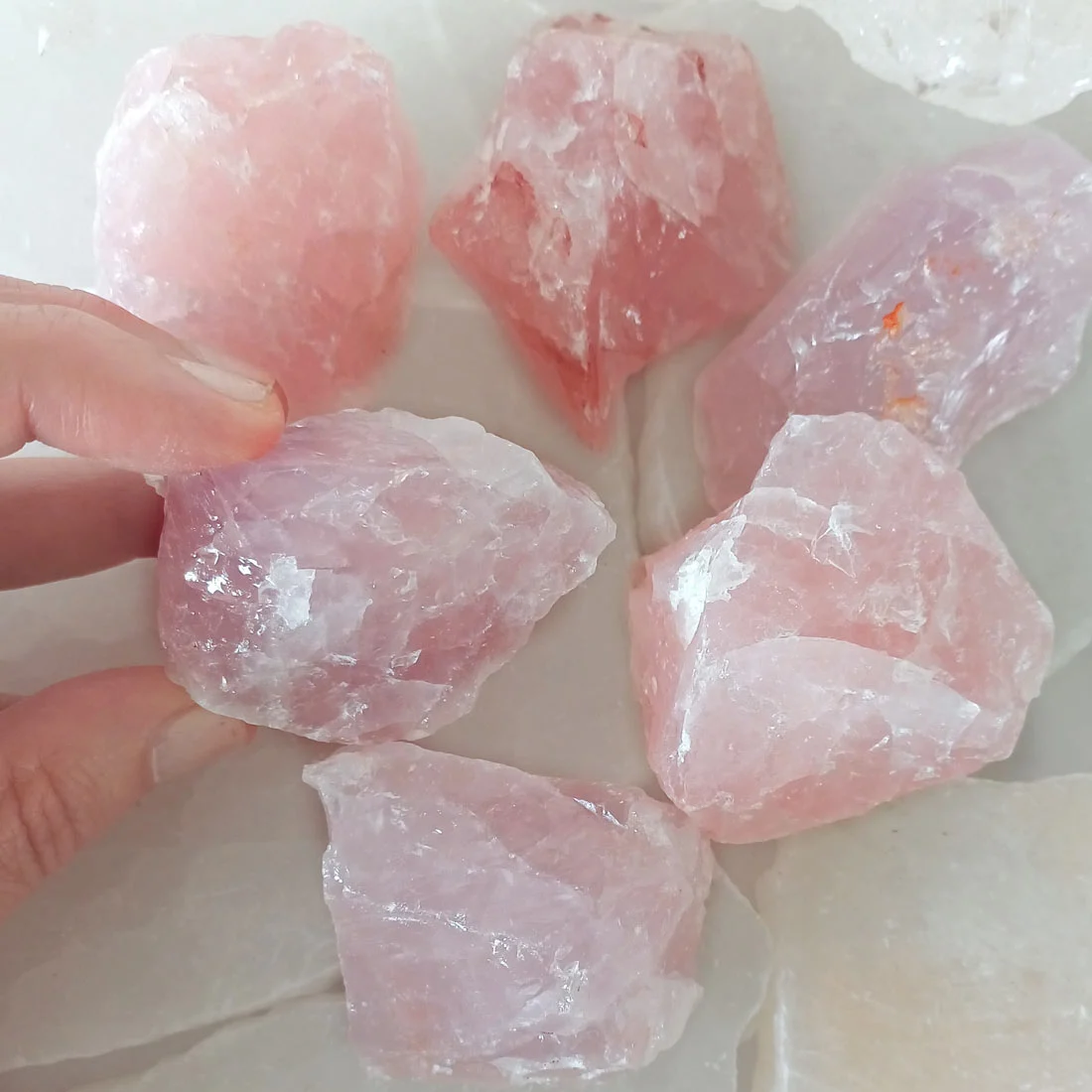
This natural Rough Rose Quartz piece has been kept in its original mineral form, with an uneven surface, natural edges and areas of translucency. Its soft pink colour varies across the piece, creating a natural combination of lighter and deeper tones.
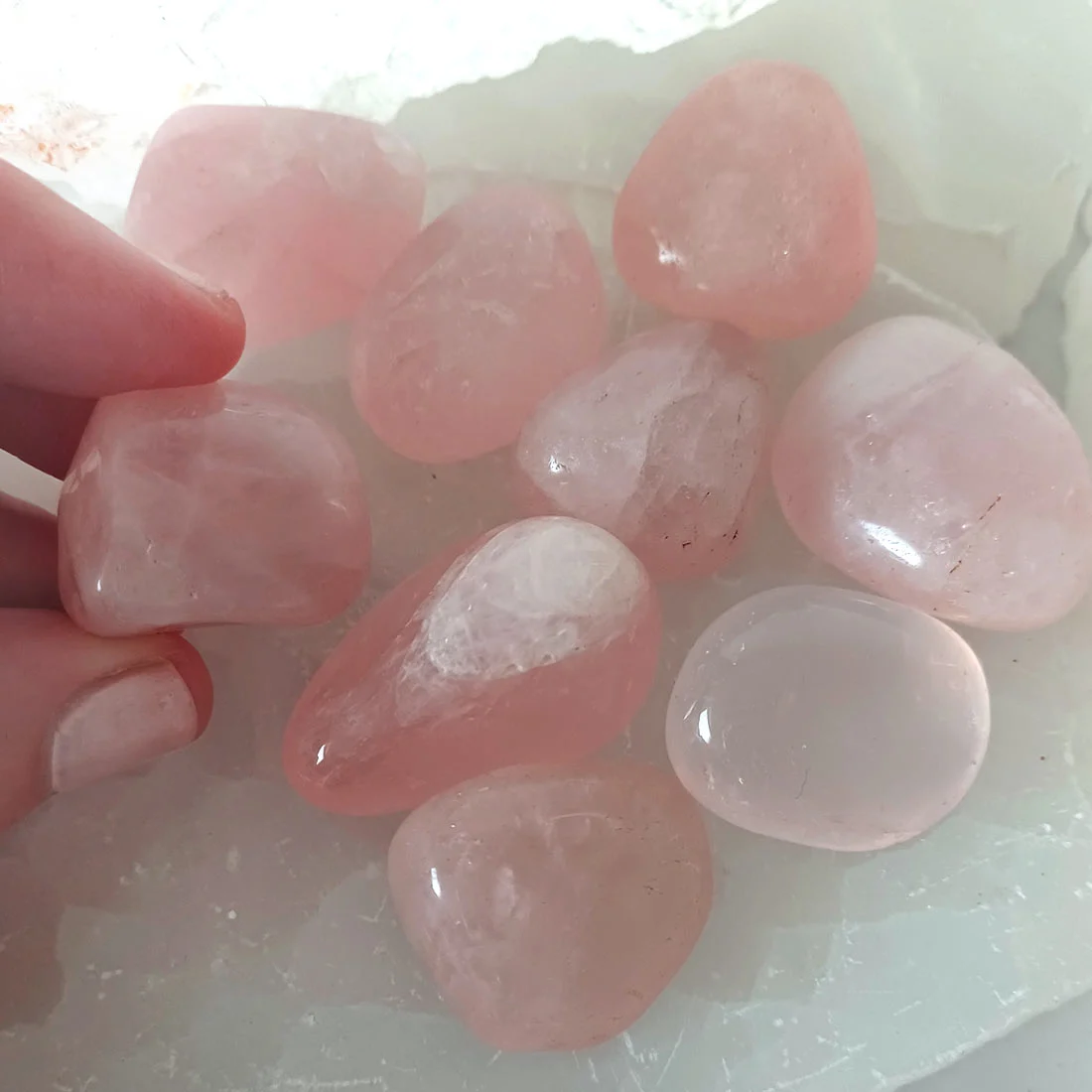
Unlike polished Rose Quartz, this specimen retains the texture and structure of the mineral as it occurs naturally. Natural fractures, surface marks and variations in colour are part of its formation.
Physical Properties
Rose Quartz is a variety of quartz and has a Mohs hardness of approximately 7. This makes it a relatively hard mineral, although the natural edges and uneven surfaces should still be handled with care.
Its pink colour is associated with microscopic inclusions and trace elements within the quartz. Depending on the specimen, Rose Quartz can range from very pale pink to deeper pink tones, while some areas may appear more translucent than others.
As a natural mineral, each piece has its own shape, surface texture and internal features.
Metaphysical Associations
In crystal traditions, Rose Quartz is associated with love, compassion, emotional balance and gentle energy. It is commonly used in meditation and crystal collections.
Rose Quartz is also traditionally connected with self-love, forgiveness and emotional harmony. Some people keep it in their personal space as a reminder of these qualities.
These metaphysical associations come from traditional crystal practices and are not scientifically established effects.
Heart Chakra
Rose Quartz is traditionally associated with the Heart Chakra, also known as Anahata.
Within chakra practices, the Heart Chakra relates to love, compassion, acceptance and emotional connection. For this reason, Rose Quartz is often included in crystal collections focused on these themes.
Its natural pink colour also makes it a popular choice for Heart Chakra displays and meditation spaces.
Display and Care
Rough Rose Quartz can be displayed on a shelf, desk, cabinet or altar, either on its own or together with other minerals and crystals.
Although quartz is relatively hard, avoid dropping the piece or exposing its natural edges to strong impact. Handle it carefully to help preserve its original surface.
For cleaning, gently remove dust with a soft, dry cloth or brush. If the piece has delicate natural surfaces or fractures, avoid abrasive materials.
A Natural Rose Quartz Specimen
This Rough Rose Quartz piece preserves the natural appearance of the mineral rather than presenting it as a polished or shaped crystal. Its irregular form, pink colour and natural surface make it suitable for mineral collections, crystal displays and spaces where natural specimens are appreciated.