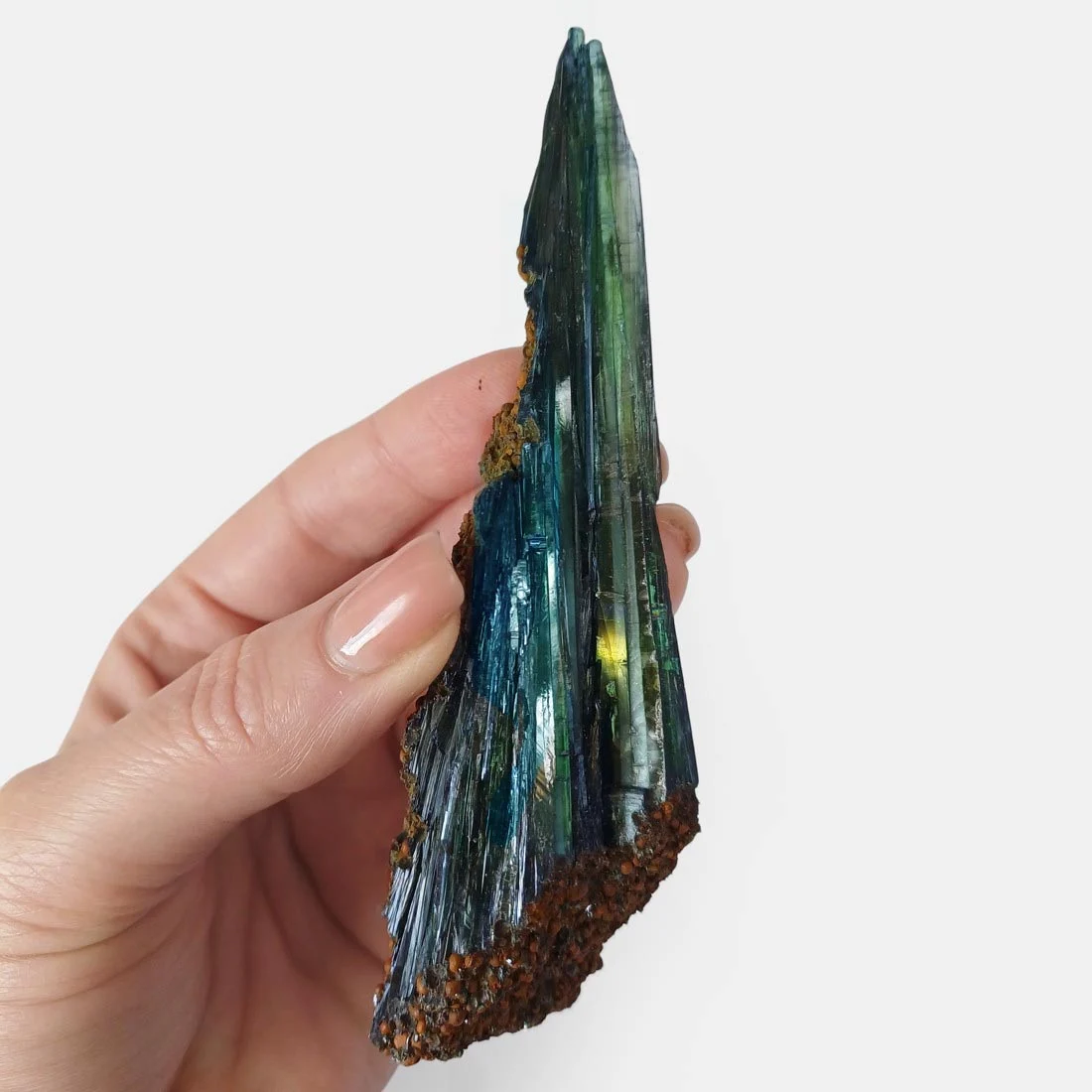
Vivianite Specimen – Rare Mineral
€110.00
Vivianite specimen is a hydrated iron phosphate mineral valued by mineral collectors for its color transformation, crystal habit, and sensitivity to light exposure. This mineral commonly forms in low-oxygen sedimentary environments and develops green to deep blue coloration through oxidation over time.
Dimensions
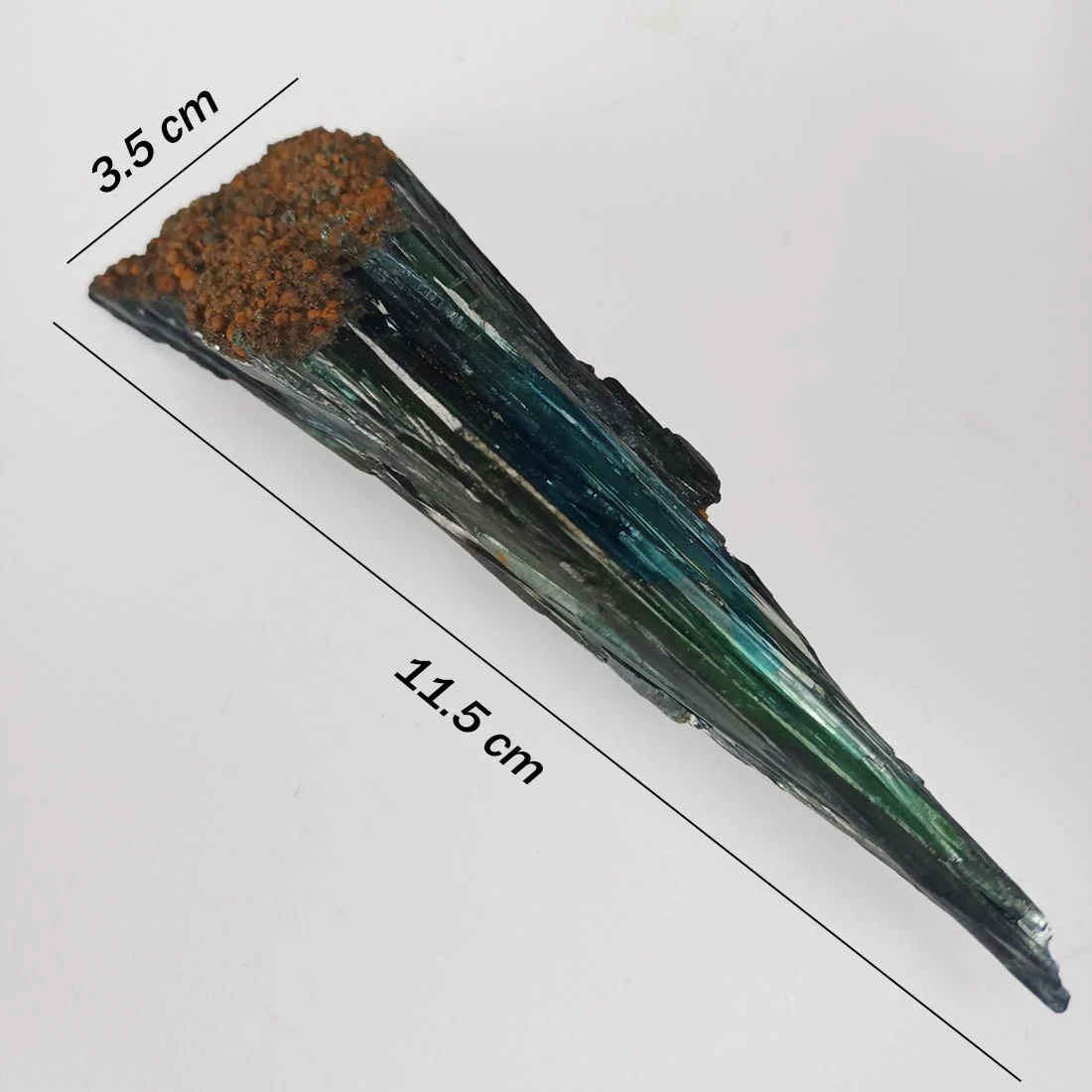
11.5 cm x 3.5 cm, weight 71.3 cm
Availability: 1 in stock
Share Vivianite Specimen – Rare Mineral to:
What is Vivianite and why is it important to mineral collectors
Many collectors ask what makes Vivianite distinct among phosphate minerals. Vivianite is a hydrated iron phosphate with the chemical formula Fe₃(PO₄)₂·8H₂O. It forms in reducing environments rich in organic material, including clay deposits, peat layers, fossil-bearing sediments, and iron-rich geological settings.
Fresh Vivianite crystals are often nearly colorless, pale green, or transparent when first extracted. However, exposure to light and oxygen gradually changes the iron oxidation state within the crystal structure. As a result, the specimen develops deeper green, blue, or blue-black coloration over time. This natural color change is one of the defining characteristics that attracts mineral collectors.
Vivianite typically crystallizes in monoclinic formations and may appear as bladed crystals, fibrous aggregates, radiating sprays, or compact masses. Surface luster ranges from vitreous to silky depending on crystal development and preservation conditions.
Because of its relatively low hardness, usually around 1.5–2 on the Mohs scale, Vivianite is considered fragile and should be handled carefully during storage and display.
What physical qualities are commonly observed in Vivianite specimens
What physical features do collectors usually look for in Vivianite? Color saturation, crystal definition, and formation habit are among the main characteristics evaluated in specimens.
Many collectors prefer pieces with well-defined elongated crystals and visible blue oxidation zones. In some specimens, color variation occurs naturally across the crystal surface due to uneven light exposure. This creates layered green and blue tones within the same formation.
Vivianite is also known for its association with fossil deposits and organic sedimentary environments. Certain specimens may form alongside pyrite, siderite, limonite, or fossilized material depending on locality and geological conditions.
What are the metaphysical associations of Vivianite
Many people ask whether Vivianite has metaphysical associations in addition to collector value. In crystal traditions, Vivianite is often associated with introspection, emotional processing, and quiet reflection.
It is commonly linked to calm environments and meditation practices rather than active energy work. Some practitioners associate it with emotional release and personal awareness.
These interpretations belong to metaphysical traditions and are not scientific properties of the mineral itself.
Which chakras are commonly associated with Vivianite
Vivianite is often associated with the heart chakra and the third eye chakra in crystal practices. Many people connect the mineral to emotional awareness and reflective thinking because of these symbolic associations.
These chakra connections are interpretive and are commonly used within meditation and energy-based practices.
How should Vivianite specimens be stored and preserved
How should a Vivianite specimen be cared for in a mineral collection? Due to its softness and photosensitivity, Vivianite should be stored away from prolonged light exposure. Direct sunlight can accelerate oxidation and deepen coloration unevenly across the specimen.
Collectors often keep Vivianite in enclosed display cabinets or dark storage conditions to slow surface alteration. The mineral should also be protected from humidity fluctuations, pressure, and abrasive contact with harder minerals.
Avoid water, chemical cleaners, and ultrasonic cleaning methods. Gentle dust removal with a soft dry cloth is usually sufficient.