Baryte and Marcasite, Poland
€240.00
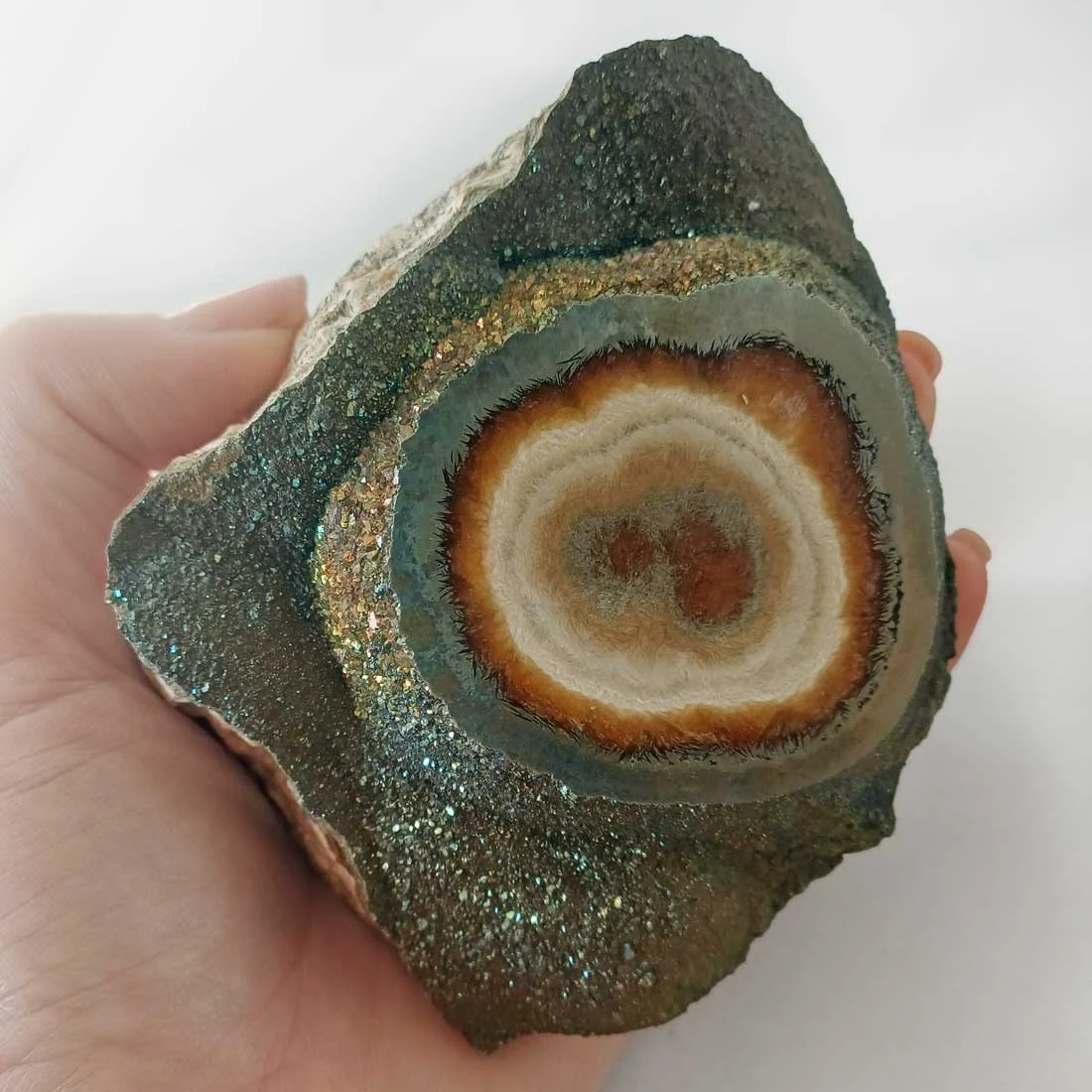
Natural Baryte and Marcasite specimen from Poland with a polished orbicular center and sparkling metallic crystal surface. A unique display mineral for collectors and crystal enthusiasts.
Dimensions
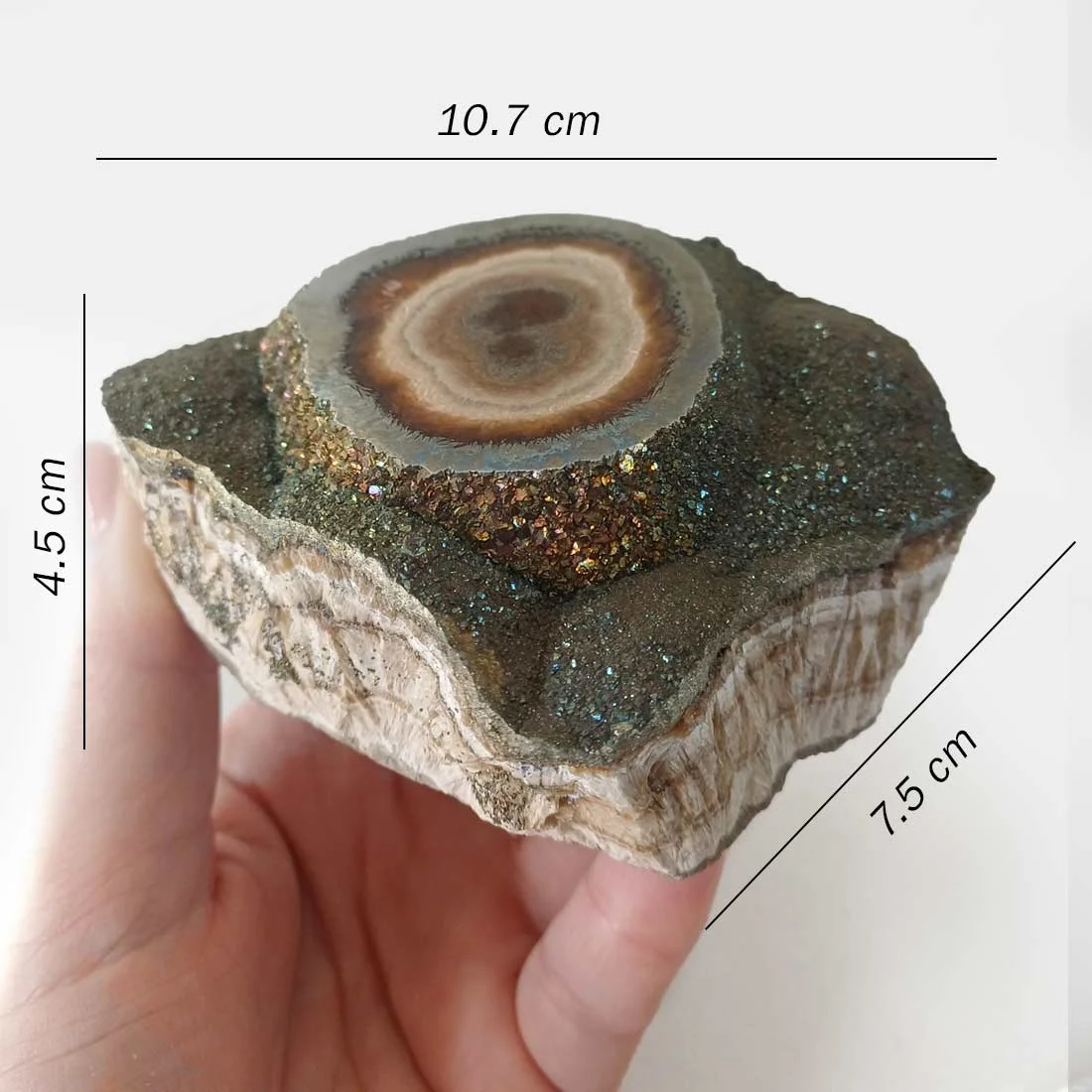
10.7 x 7.5 cm, height 4.5 cm, weight 0.669gr
Availability: 1 in stock
Share Baryte and Marcasite, Poland to:
Geological Composition
This natural Baryte and Marcasite specimen from Poland is a distinctive mineral formation displaying a polished orbicular interior surrounded by a sparkling metallic crystal surface. The piece combines the soft layered appearance of Baryte with the reflective texture of Marcasite, creating a specimen valued by both mineral collectors and those interested in geological formations.
What Is Baryte?
Baryte, also known as barite, is a mineral composed of barium sulfate (BaSO₄). It forms in sedimentary, hydrothermal, and vein environments, often developing alongside sulfide minerals such as pyrite, marcasite, galena, and sphalerite. With a relatively high specific gravity compared to many common minerals, Baryte is notable for its density despite its often delicate appearance.
Its crystal system is orthorhombic, and it may occur in tabular crystals, nodules, rosettes, or layered masses such as this specimen. Many people ask what Baryte is used for, and scientifically it has long been valued as a weighting agent in drilling fluids, radiation shielding materials, and industrial applications requiring high-density minerals.
Formation of Marcasite
This specimen also features Marcasite, an iron sulfide mineral with the chemical formula FeS₂. Although chemically identical to pyrite, Marcasite forms under different geological conditions and develops a distinct crystal habit and texture. It commonly occurs in low-temperature sedimentary deposits and often forms radiating or druzy surfaces with a metallic luster.
The sparkling outer layer visible on this specimen reflects the fine crystal growth typical of Marcasite-rich mineralization. Slight iridescent tones may naturally develop over time due to mild surface oxidation, giving the metallic crystals additional visual depth.
Orbicular Growth Patterns
The polished center reveals concentric growth bands in cream, grey, brown, and rust tones, preserving the mineral’s natural internal structure. These orbicular patterns form gradually as mineral-rich fluids deposit successive layers over long geological periods.
The circular structures visible within the stone are natural growth formations created through repeated mineral deposition. Each layer represents changes in chemistry, temperature, and environmental conditions during formation, making every specimen unique in pattern and structure.
Polish Mineral Deposits
Poland is known for producing a variety of sulfide-associated mineral specimens, particularly from historic mining regions rich in lead, zinc, and iron mineralization. Baryte specimens from Poland are appreciated for their association with metallic sulfides and their naturally layered formations.
Specimens combining Baryte with Marcasite are especially sought after by collectors because of the contrast between soft sedimentary textures and reflective metallic crystal surfaces.
Collector & Display Specimen
This Baryte and Marcasite specimen from Poland is both a geological display piece and a collectible natural mineral, appreciated for its contrasting textures, layered formation, and metallic sparkle. The polished face highlights the internal mineral structure while the natural crystal exterior preserves the raw character of the specimen.
Clean with a soft cloth. Avoid harsh chemicals